What if we learn from Gen Z?

By 2030, Generation Z and Millennials will make up more than 70% of the global workforce.
Distrust of the new generations is almost an intergenerational sport. Millennials were labeled as spoiled; Generation Z, as fragile, distracted and demanding.
However, hasn’t it been proven time and again that these new generations had a lot to contribute? Each generation is formed in a different context, which defines its way of seeing the world, of working and of prioritizing what it considers important.
It’s about time we stop looking at Generation Z with condescension and learn a few things from them.
2030 is here: a workforce dominated by Zs and Millenials
According to Deloitte’s Deloitte’s 2025 global studyfor Generation Z, learning and development are a real priority. While only 6% of young people aspire to leadership positions, more than 20% cite learning opportunities as one of the top three reasons for choosing a company to work for. What really drives them is the personal growththe balance between life and work, and theand the possibility of continuous and meaningful learning. However, many feel that their managers do not offer the necessary resources and that those available do not suit their needs.
The same study shows that by 2030, Generation Z and Millennials will make up more than 70% of the global workforce. This fact alone should be enough to rethink training and development strategies in organizations, as it is no longer a matter of adapting to please a minority or “playing the hipster”, but of evolving to respond to a present and future demographic reality.
It’s not just a question of age, it’s digital mindset.
Although we tend to classify people into generations (Baby Boomers, Gen X, Millennials, Gen Z), the reality is that many of the behaviors we attribute exclusively to Zs are actually part of a digital transformation that, whether we like it or not, is affecting us all.
Or is it not true that we are constantly looking for stimulation, we change series if we are not hooked in the first chapter, and we trust more in a recommendation we get on social networks than in an official guide? What began as a particular way of consuming content in the youngest, has become a new cultural paradigm. And this has profound implications, also in the way we learn.
So to talk about “how Generation Z learns” is, in a way, to talk about how all of us are learning to learn in this digital age: more visually, more quickly, more socially, and more personalized.

What does this mean for L&D?
All this has relevant implications for Learning & Development. The sector is calling for a change of mentality, and for this we can rely on the following keys:
1. Bite-sized learningbrief, specific and available at a moment’s notice
Generation Z has grown up in a world where content comes in capsules: 30-second TikToks, Instagram stories, YouTube video “shorts.” They expect to learn the same way: in micro-moments, when they need to, without having to go through long, bureaucratic processes with unnecessary explanations.
Microlearning is one of the most obvious answers, although not the only one, a practice that we also highlight among the trends for 2025. The key is to offer curated, relevant content that responds to a specific need at the right time.
2. The importance of a visual, attractive and dynamic design.
It is no longer enough to turn PowerPoints into interactive modules, we have to think about how we present information. Platforms like TikTok, with a simple, intuitive interface and an algorithm that understands user interests, have taught an entire generation to expect content that is useful, as well as engaging, entertaining and personalized.
This does not imply trivializing learning, but being aware that form matters as much as substance. Instructional design should be inspired by visual storytelling, attentional economy and interactivity.
3. The power of learning as you live
TikTok has become an omnipotent platform. GenZs use it to entertain themselves, but also to discover new ideas, solve doubts and learn practical things. In fact, according to a Adobe’s 2023 studyIn the U.S., 67% of GenZs in the U.S. turn to TikTok as a search engine before Google.
Often, from a random video that pops up in the app, a more in-depth research on the topic is born. Learning does not start on an LMS platform, but in a spontaneous impulse to discover something new. Thus, companies should offer social learning environments such as Totara Engage that encourage exploration, curiosity and personalization.
4. Practical and experiential learning
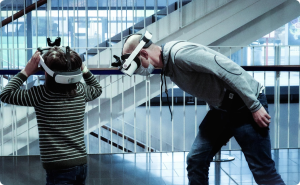
Generation Z especially values learning that is practical, relevant and applicable to the real world. They prefer learning experiences that allow them to “learn by doing”, avoiding extensive theoretical content or superfluous data.
According to a report by ANCYPEL, this generation integrates knowledge in a significant way through experienceAnd who wouldn’t? It is no news that training with simulations of real situations or case studies are more efficient, so incorporating these strategies in our projects will improve knowledge retention, as well as the motivation and commitment of the new generations.
And the risks?
Of course, there are those who question this approach. Are we feeding a supposed pathology of reduced attention? Wouldn’t it be better to advocate deep, reflective learning?
The key is balance. We cannot abandon critical thinking or sacrifice depth for entertainment. But we must know how to give each format its place: brief content can be the spark to motivate a deeper understanding. A short video can arouse curiosity that leads to more complex research.
The future cannot be resisted, it can be learned.
As we have seen, Generation Z is the present. To adapt our training strategies to their expectations is not to surrender to “their demands”, but to dare to transform the way we access, process and apply knowledge.
Instead of trying to make them adapt to our ways of learning, why not let them teach us new ones?
Did you like this article? Sign up for free in Actua Learn, our space for Training and Development professionals, and access this and many more resources: webinars, current articles, trainings… We are waiting for you!


