
Factor Humano interviews us together with IVI RMA Global Education
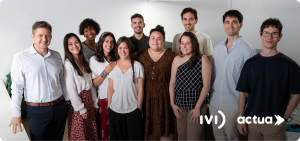
We would like to share the interview published in Human Factor about the project we have developed together with IVI RMA Global Education.
At Actua we have had the privilege of accompanying IVI RMA in a large-scale training transformation, betting on a scalable, customized solution aligned with its international growth. A strategic project that combines technology, pedagogical vision and a customized implementation with Totara as a platform.
In the article, the IVI RMA team shares its experience, the challenges of the process and how together we managed to design a multi-regional, flexible and results-oriented training environment.
We leave you here the complete interview, don’t miss it!
–
With a presence in multiple regions and a constantly expanding team, IVI RMA Global Education – an educational institution specialized in reproductive medicine – needed a scalable, flexible and customized training solution. Together with Actua and the Totara platform, they have managed to transform their internal and external training model, integrating technologies such as SAP, Teams and AI, and adapting the experience to each professional profile.
What was the initial approach to the project and what specific needs did IVI RMA Global Education identify?
Diego Garcia: We were starting from a more limited system, which did not offer a customized environment and which depended on external tools and connections via LTI to access all the functionalities we needed. After the international expansion of IVI RMA Global, we needed a multitenant environment so that each region would have its own independence, but within a global platform.
The relationship with Actua began in mid-2024. I knew the benefits of Totara and it adapted to what we wanted, especially in terms of internal functionality. In addition, it allowed us a very broad customization. We have different brands, which implies not only a different look & feel, but also different processes and methodologies. Miguel Tablado: We needed a team capable of maintaining a constant pace of updates, since IVI RMA’s structure is constantly evolving. In just five years we have grown from 1,000 to 5,000 employees and have expanded our presence to four regions. Our intention is to continue to grow, although we do not know what the specific needs of the new clinics will be. Therefore, we were looking for a robust system, capable of supporting a high volume of concurrent users and, at the same time, facilitating integration with other systems. The onboarding training we offer through IVI RMA Campus NEO is fundamental for the integration of new clinics.
How did you manage to customize the training experience for each type of user?
Alix Borregales: The initial analysis of their processes – identifying needs, flows and pain points – was key to designing a customized training experience for each user. Thanks to this phase, in Totara Learn we implemented dynamic audiences and a multitenant structure that enables local management for different markets, so that each user only accesses content relevant to their role and geographic location.
We also set up dashboards and reports tailored to each profile. As a result, each role has its own metrics and tools: for example, a team leader can access specific reports on his staff, while an employee sees his training history, badges and certificates on his dashboard. In addition, we empowered the IVI RMA team to manage these segmentations autonomously in the future, ensuring that the platform can evolve.
What kind of formats and methodologies do you use to ensure that each group receives relevant and effective training?
Diego: We design innovative content, always based on a rigorous instructional analysis that allows us to adapt to the characteristics of each professional group. Training medical personnel does not require the same approach as training administrative profiles, so we work closely with subject matter experts to ensure the relevance of each proposal. In addition, we function as an innovation laboratory. We constantly explore emerging technologies, as long as they fit with our learning objectives. Currently, for example, we are working with cloned avatars for language customization. Totara, on the other hand, allows us to configure itineraries and course types according to professional profile.

More than 3,500 courses were migrated from the previous platform, what challenges did you face in this massive migration?
David Lázaro: We had to move a very high volume of content (courses, SCORMs, etc.) and years of historical data, without loss of information.
To address this, we defined a step-by-step process and created specific tools to automate much of the work. For example, we designed a unified course template to restore content homogeneously and developed CSV templates for bulk uploading.
All historical training information was incorporated into the new Neo Campus through Totara’s Evidence module, thus maintaining each user’s previous achievements.
Miguel: A migration of this magnitude always generates a certain vertigo. It involves handling a large amount of information, taking responsibility for the training of teams, ensuring the correct migration of historical data, …
The initial analysis, the creation of processes and the vision of scalability have been fundamental for this project to work. In our case, in addition to the enormous diversity of professional profiles, we are present in multiple regions with very different regulations.
How has Actua’s solution influenced the development of programs such as Learning for Excellence (LFE)?
Diego: LFE is a specialized training initiative aimed at different professional profiles within the company, mainly for the medical and laboratory team. Each profile has its own path of excellence linked to specific objectives, which not only allows us to guide professional development, but also to keep our staff up to date.
The program includes both mandatory and voluntary training. In addition, it allows the uploading of evidence and certificates, as well as external training, presentations at conferences, master classes or other contributions made by our employees. All of this is integrated into a system that feeds in real time into a customized point viewer within the platform. This is one of the great innovations we have achieved thanks to Totara.
What role did integration with systems such as SAP or process automation play?
Alix: Beyond technical execution, we acted as a true strategic partner, making every integration – with SAP, Office 365 or Teams – part of an overall vision of efficiency. In particular, connecting the Totara platform with SAP ensured that user management and organizational information flowed transparently and without duplication. Thanks to this integration, SAP additions, deletions and profile changes are automatically reflected in the training campus, eliminating administrative burdens and ensuring consistent and up-to-date data at all times.
In addition, numerous automations of critical processes were implemented, such as the creation of users or enrollment in mandatory courses according to role or department, which has allowed the campus to scale to thousands of users while maintaining agile management.
How was the need for customization addressed without compromising the scalability and future upgradeability of the platform?
David: From the beginning we were very aware of the balance between customization and scalability. We adapted Totara to IVI RMA’s needs through native configurations and features, avoiding as much as possible custom developments that would hinder future upgrades.
For example, the interface customization was done using the configurable graphic theme and custom CSS. Likewise, the advanced functionalities we implemented – dashboards by user profile, automatic course assignment or content visibility rules – were built leveraging the standard tools offered by Totara.
In addition, integrations such as SSO with Office 365, SAP or Microsoft Teams for seminar management, lay the groundwork for incorporating other functionalities that IVI RMA may require.
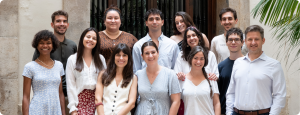
Looking ahead, what plans or new features do you have in the pipeline?
Miguel: We have a well-defined roadmap for the next phases of development. One of the next projects will be the integration of the platform with our external training sales gateway. We are also evaluating the integration of Campus NEO with other key company systems.
As for AI, we see it as a strategic opportunity to transform both content and learning methodologies. Our operational reality, which encompasses content in six different languages, drives us to constantly innovate, and AI plays a key role in this.
Alix: Another important focus is to exploit Totara Engage’s capabilities to foster social and collaborative learning, creating communities where professionals from different IVI RMA centers share knowledge and best practices. In terms of AI, it could provide course recommendation systems tailored to the profile and history of each employee, as well as virtual assistants or integrated chatbots to guide users or resolve frequent doubts.
Here is the link to the Human Factor magazine.


